Spatial Computing in Daily Life
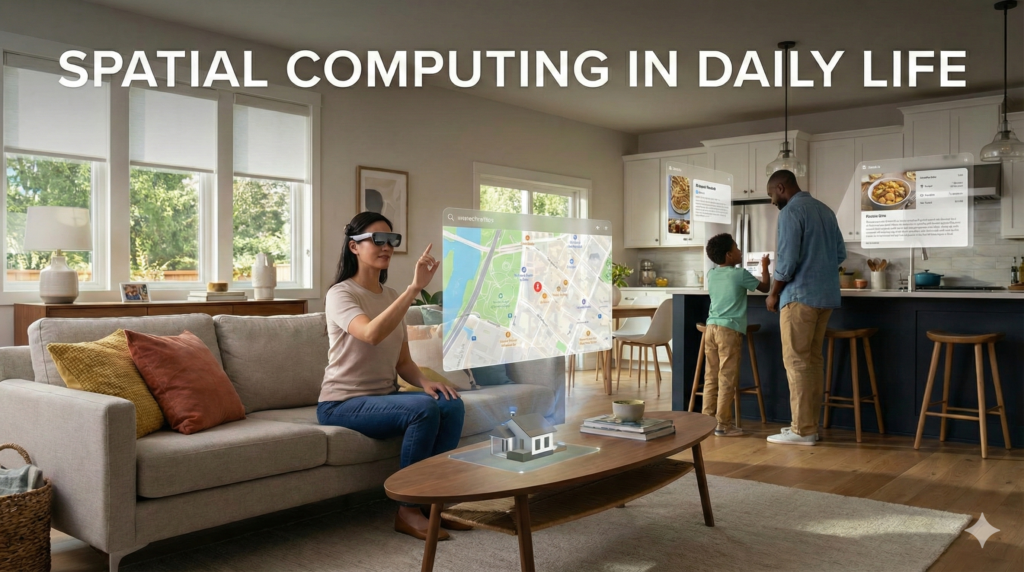
You wake up and your home reacts to your movements. The lights turn on, music plays, and your coffee starts brewing. Spatial computing helps make these things happen in a digital world. You do not need to tap screens anymore. You can use your voice or move your hands to control virtual objects. Look at how fast people are using Spatial Computing in daily life:
| Region/Sector | Adoption Rate/Investment Growth | Year |
|---|---|---|
| EU Manufacturing Firms | 22% | 2024 |
| Japan Enterprises | 18% | 2024 |
| Chinese Factories | 40% | 2023 |
Have you seen how IKEA’s “Place” app lets you see furniture in your room? This helps people return fewer products. The way you live and connect with others is changing quickly.
Key Takeaways
https://amzn.to/48R6U4n
Spatial computing changes daily life. You can control devices with gestures and voice. This makes using them easier and feels more natural.
Augmented reality (AR) makes shopping better. You can see products in your space before you buy them. This helps you return fewer things and feel happier with your choices.
In education, spatial computing helps students learn in fun ways. Students can use 3D models and virtual experiences to explore subjects. This makes learning more interesting.
Healthcare gets better with spatial computing. Doctors use mixed reality for training and planning surgeries. This helps make surgeries safer and faster.
As spatial computing becomes part of daily life, homes and workplaces get smarter. They can change to fit your needs. This makes you more comfortable and helps you get more done.
Spatial Computing in Daily Life
Everyday Interactions
You might not notice it, but spatial computing in daily life is everywhere. When you use your phone to see how a new chair looks in your living room, you are using spatial computing. This technology changes how you shop, learn, exercise, and even talk to others. Here are some ways spatial computing in daily life is making things easier and more fun:
Shopping: You can try on clothes virtually or see if a table fits in your space before you buy it.
Fitness: Apps give you a virtual trainer who guides you through workouts right in your living room.
Education: Interactive textbooks let you explore science labs or ancient cities without leaving your desk.
Remote Collaboration: You and your friends or classmates can work together as if you are in the same room, even if you are miles apart.
You do not need to press buttons or swipe screens all the time. Now, you can use your voice, wave your hand, or just move around. This shift to gesture, voice, and movement-based controls makes your daily routines smoother and more natural.
Recent research shows that spatial computing in daily life also changes how you communicate at home. People in cities make more calls but move around less, while people in rural areas move more but call less. Where you live and your environment shape how you connect with others. Age and gender also play a role in how often you talk to family and friends.
Transforming Home and Entertainment
https://amzn.to/3LcCjoO
Your home is becoming smarter every day because of spatial computing. Imagine walking into your room and the lights turn on by themselves. Your favorite playlist starts, and the temperature adjusts to what you like. You do not need to touch a switch or use a remote. Spatial computing in daily life lets you control your home with simple gestures or your voice.
Entertainment feels more real, too. You can play games where you move your body to control the action. You can watch movies that make you feel like you are inside the story. These immersive experiences boost your engagement and make family time more exciting.
Here is how spatial computing in daily life is changing your routines and fun:
AR Shopping: You see products in your space before buying them.
AR Fitness: Virtual trainers help you exercise at home.
Interactive Learning: You explore new subjects in a hands-on way.
Holographic Collaboration: You work with others in a shared virtual space.
Spatial computing in daily life brings new ways to interact, learn, and enjoy your time at home. You get more control, more fun, and more engagement with the world around you.
What Is Spatial Computing?
Definition and Core Concepts
You may ask what spatial computing means. It is when computers mix digital things with your real world. You can see and use digital objects like they are in your room. This is not only about screens or buttons. You can use your hands, voice, or body to control things.
Spatial computing helps computers know where you are and what you do.
You can move, talk, or use gestures to work with digital content.
It makes 3D experiences that join real and virtual worlds.
Special sensors and ai-powered spatial computing help computers understand your space.
You can see this with ar and vr. Augmented reality puts digital pictures into your real world. Virtual reality puts you in a new digital place. Both use ai-powered spatial computing to make things feel real and smooth. Digital twins are also part of this. They are copies of real things, like a building or your body, that help people learn, plan, or fix problems.
Note: Companies like Boeing and Airbus use digital twins and ar to help workers build planes faster and make fewer mistakes. Hospitals use virtual reality and digital twins to practice surgeries before working on real people.
How It Differs from Traditional Tech
Spatial computing changes how you use technology. You do not just tap or click. You move, talk, and use digital objects in your space. This is a big change in how people and computers work together.
Here is a quick look at the differences:
| Aspect | Spatial Computing | Traditional Computing |
|---|---|---|
| User Interaction | Changes with your actions and what is around you. | Uses set tools like keyboard and mouse. |
| Experience | Feels real and 3D. | Stays on flat screens and 2D shapes. |
| Technology | Uses ar, vr, ai, and digital twins. | Uses basic software and hardware. |
Spatial computing gives you new ways to use digital things. You get to use technology in a way that feels easy and fun.
Applications Across Industries
Consumer Tech and Smart Homes
Spatial computing is in your home every day. Smart devices listen to your voice and watch your movements. They even know where you are in the house. When you walk into the kitchen, the lights turn on. Your smart speaker plays music you like. These tools make life easier and fit your needs.
Here’s how big brands use spatial computing to help customers and make cool 3D experiences:
| Brand | Application of Spatial Computing | Impact on Consumer Experience |
|---|---|---|
| Nike | Uses foot scanning and AR overlays for personalized sizing and recommendations. | Reduces returns and improves customer satisfaction through precise fits. |
| Sephora | Implements smart mirrors and AR visualization for product trials. | Increases engagement and conversion rates while enhancing hygiene and operational efficiency. |
| IKEA | Utilizes spatial visualization tools to help customers place products in real environments. | Lowers return rates for bulky items by reducing uncertainty around size and aesthetics. |
You get more control over your home with these tools. Mixed reality helps you see if new furniture fits before you buy it. Smart thermostats learn what you like and change the temperature for you. These tools help you save energy and money.
Retail and Shopping
https://amzn.to/4scypwM
Shopping is different now. You can use augmented reality to try on shoes or makeup without touching anything. Online stores use spatial computing to show you how a couch looks in your living room. These tools make shopping fun and help you pick the right things.
Here’s how spatial computing changes shopping:
| Evidence Description |
|---|
| Spatial computing merges physical and digital spaces, creating immersive shopping experiences. |
| AR apps allow customers to visualize products in their environment, enhancing decision-making. |
| Virtual point-of-sale systems improve transaction flexibility and operational efficiency. |
| Accurate product representations reduce return rates by enabling informed purchasing decisions. |
Stores and websites see more people getting involved. Brands use mixed reality to give virtual tours of homes for sale. You can walk through a house on your phone or computer. These tools help you feel sure before you buy or rent.
Healthcare and Wellness
Spatial computing brings new ways to help in healthcare. Doctors use mixed reality to plan surgeries. They can see 3D models of organs and practice before real surgery. This makes operations safer and faster.
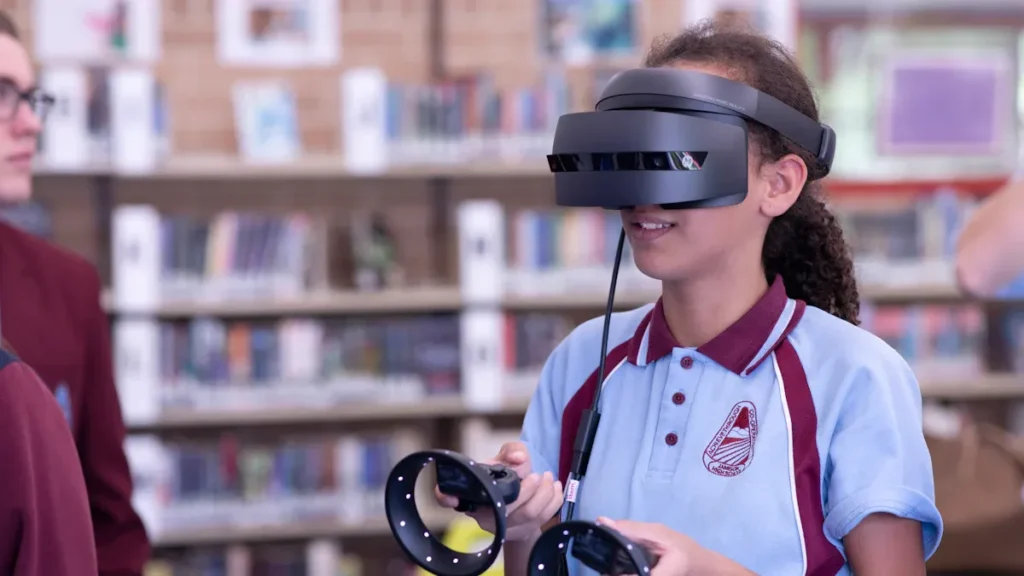
Hospitals use virtual reality for training. Nurses and doctors practice in safe, pretend settings. They learn how to handle emergencies without real danger. These tools help them get better at their jobs and feel more confident.
You also see wellness tools at home. Apps use spatial computing to guide you through workouts. A virtual trainer shows you the right moves. This keeps you safe and helps you stay motivated.
Education and Training
Learning feels more real with spatial computing. You can use augmented reality to explore math or science labs. These tools turn lessons into 3D experiences. You can see planets, molecules, or old cities in your classroom.
| Aspect | Description |
|---|---|
| Technology Used | Augmented Reality (AR) |
| Educational Focus | Mathematics education, particularly in spatial skills development |
| Key Findings | AR enhances learning experiences through interactive 3D objects and real-world integration. |
| Contextual Influences | Effectiveness is influenced by collaborative settings and instructional design. |
| Research References | Chang et al. (2022), Jabar et al. (2022), del Cerro Velázquez & Morales Méndez (2021b) |
Teachers use these tools to make learning more fun. You can work with classmates in mixed reality. These tools help you understand hard ideas and remember them longer.
Work and Collaboration
Workplaces are changing fast with spatial computing. You can join meetings in mixed reality and feel like you are in the same room. Companies use these tools for virtual tours of new offices or factories. You can walk through a building before it is even built.
Here are some ways spatial computing changes work and helps customers:
In job training, you use pretend workspaces that look real. These tools help you learn faster and make fewer mistakes.
Mercedes-Benz uses virtual remote assist. Experts help technicians by showing them what to do. This helps customers and fixes problems quickly.
The U.S. Army works with Microsoft on special tools like the Integrated Visual Augmentation System. Soldiers get 3D maps and thermal images for safety and teamwork.
In healthcare, you practice hard procedures in safe, virtual places. These tools help doctors plan surgeries and care for patients.
You see more customer engagement in every field. Real estate agents use virtual tours to show homes to buyers anywhere. Online stores use mixed reality to make shopping more fun. These tools make work, shopping, and learning more exciting and personal.
Enabling Technologies
AR, VR, and AI Integration
Spatial computing feels amazing when AR, VR, and AI work together. These tools let you mix digital things with your real world. AR shows digital images in your room. VR takes you to a new place. AI is like a smart helper. It helps devices know what you want and what is around you.
Here’s how these technologies help each other:
| Role of Technology | Description |
|---|---|
| Cloud Rendering | You get great graphics on simple devices using remote servers. |
| Seamless Multi-User Experiences | You and your friends can be in the same digital world at once. |
| Persistent World Mapping | 3D maps stay updated so your device always knows your location. |
| Semantic Understanding | Your device learns what objects are and how to use them. |
| Gesture and Gaze Recognition | You can use your hands or eyes to control things, no controller needed. |
| Generative Content | AI makes new things right away, so your experience feels real and new. |
AI makes AR and VR smarter and more helpful. It helps your device understand your space and react to you. For example, a virtual pet can walk around your furniture. A digital ball can bounce off your real wall. This makes everything feel more real and fun.
Tip: Try AR to see if a desk fits in your room. Use VR to visit a museum from your couch.
Sensors and Spatial Mapping
Sensors help spatial computing work well. They let your device know where you are and what is happening. Cameras, microphones, and motion sensors work together to make a map of your space. This map helps your device put digital things in the right spot.
Sensors share their data to make sure it is correct.
Devices can update their maps right away if you move things.
Smart systems use this data to make your experience more fun.
You see this in smart homes that change lights when you walk. Cities use these tools to help with traffic and keep people safe. AR and VR apps use sensors to help you find your way or play games that fit your room.
Connectivity (5G, IoT)
Fast connections make spatial computing possible. 5G and IoT let your devices talk to each other quickly. This gives you smooth, real-time experiences with no waiting.
| Advancement Type | Description |
|---|---|
| Ultra-low latency | You can interact with digital worlds right away, so it feels real. |
| High bandwidth | Lots of data moves fast, so AR and VR look clear and sharp. |
| Massive connectivity | Many devices connect at once, so your smart home or city works together. |
| Digital twins | You get digital copies of real places, so you can watch and control them from anywhere. |
| Operational cost reduction | Saves money by helping factories and businesses work better with digital tools. |
You can walk through a digital twin of your school. You can see live updates from smart devices in your home. These connections help you stay up to date and make good choices every day.
Benefits of Spatial Computing
Enhanced User Experience
Spatial computing makes life easier right away. You can control your home by waving or speaking. Experiences feel real and exciting. Shopping, learning, and relaxing become more personal for you. You use your favorite apps and devices more often. These new ways to interact save time and help you do things faster. You do not need to look for remotes or tap lots of menus. Everything works smoothly and feels natural.
Accessibility and Inclusion
Spatial computing helps everyone, even people with disabilities. Technology can change to fit your needs as you use it. If you cannot use a keyboard or mouse, you can use your voice or gestures. This makes digital spaces easier and more welcoming. Here are some ways these features help:
| Feature | Description |
|---|---|
| Adaptive interfaces | Change quickly to fit what users need |
| Gesture/voice controls | Let people interact without old barriers |
| Simulations for skill-building | Give safe places to practice and learn |
You can try new skills in a safe place. You get more chances to join in and learn. These changes help businesses by reaching more people and making services open to all.
Productivity and Collaboration
Spatial computing helps you work better. You can meet your team in a virtual room that feels real. You can share 3D models and ideas as if you are together. This makes teamwork easier and faster. Here are some ways it helps:
You join quick digital meetings that feel like real talks.
You connect with your team in a shared virtual space.
You use both real and digital tools to brainstorm.
You find that AR makes remote work less annoying.
Your team works faster and makes better choices. Spatial computing connects the real and digital worlds. You get updates right away and AI helps you make good decisions. You also use training tools to practice new tasks safely, which helps everyone do better.
Challenges and Considerations
Device Limitations
Many people cannot use spatial computing devices because they cost a lot. Only some people can buy the expensive hardware. These devices also collect a lot of your data, which makes people worry about privacy. You might wonder who owns your data and how it is used. People are also making new rules for using these devices at home and in public.
| Limitation Type | Description |
|---|---|
| High Costs | The expensive hardware needed for spatial computing can make a gap between people who can buy it and those who cannot. |
| Privacy Concerns | Devices gather a lot of data, so people worry about who owns it and how it is kept safe. |
| Social Norms | People need new rules and manners as these devices become part of daily life. |
Tip: To use spatial computing more, try to find devices that are not too expensive and keep your data safe.
Privacy and Security
Spatial computing can bring new problems for your privacy and safety. Devices track where you go and what you do. If someone breaks in, your private information could be stolen. Bad people can trick these systems, which can cause safety issues. Hackers can attack and stop access to spatial data, which can affect flights or emergency help.
| Risk Type | Description |
|---|---|
| Confidentiality breaches | If someone gets your location data, they can see your private or work information, which can lead to privacy problems and even spying. |
| Spoofing and manipulation | If someone changes geospatial data, it can fool important systems and cause big safety problems, like GPS tricks that hurt transportation. |
| Availability attacks | Hackers can block spatial data, which can stop flights or emergency services and put people in danger if they need location data to work. |
You should always protect your data and check your device settings. Use strong passwords to keep your information safe. Privacy is very important as spatial computing becomes part of your life.
Compatibility and Fragmentation
Spatial computing has problems with devices and apps working together. Sometimes, devices and apps do not match, so you cannot use them all. Companies make different platforms, so developers must pick one, which limits your choices. Devices should be easy to wear and liked by everyone. There should be more than just games or demos in the app store. As spatial computing gets more social, people worry more about privacy and data.
| Challenge Type | Description |
|---|---|
| Ecosystem Fragmentation Risk | Different XR platforms can split the market, so developers must choose one side. |
| Hardware & UX Maturity | Devices should be small, comfy, and liked by people for XR to replace old tech. |
| App Ecosystem Breadth and Quality | There need to be lots of good XR apps, not just games or demos, for people to use them more. |
| Privacy and Data Concerns | As XR is used with friends, worries about who owns data and privacy get bigger. |
Note: You can get more from spatial computing by picking platforms that work with many devices and apps. This helps you enjoy more features and options.
Future Trends in Spatial Computing
Deeper Integration in Daily Life
You will see spatial computing become a bigger part of your daily life in the near future. Experts say this technology will soon be a multi-billion-dollar global market. You might notice your routines changing as more devices use spatial computing to help you at home, at school, or at work. Here are some things you can expect:
Your morning routine could include smart mirrors that give you news and weather as you brush your teeth.
Healthcare will use spatial computing to make checkups and treatments easier.
Schools will bring lessons to life with 3D models and interactive activities.
This technology will change how you interact with computers. You will use gestures, voice, and movement instead of just screens and buttons. Physical spaces will turn into digital playgrounds where you can learn, shop, and connect.
Industry Innovations
Big companies are working on new tools that will shape the future. You might see headsets built for tough jobs, like helping workers fix machines from far away or practice skills with digital training. Some companies have made handheld devices that scan rooms and objects to create 3D models in seconds. Others offer platforms for building AR, VR, and MR experiences, making it easier for creators to design interactive content. There is even a wristband that lets you control digital objects just by moving your hand. These inventions will make your work, play, and learning more natural and fun.
Preparing for the Future
You can get ready for these changes by taking a few steps:
Check if your devices and internet can handle new immersive experiences.
Try out small projects that use spatial computing to see what works best.
Learn new skills through training and hands-on practice.
Keep your information safe by thinking about security.
Work with partners who know how to use this technology.
If you start now, you will be ready for the future. You will find new ways to learn, work, and connect as spatial computing becomes part of your world.
Spatial computing makes life, learning, and work different. You find new ways to shop and set up your home. It helps you connect with people in new ways. Look at these changes in different industries:
| Industry | Impact |
|---|---|
| Retail | You can see products in 3D. |
| Healthcare | Doctors help you from far away. |
| Education | Students learn with fun, interactive tools. |
Keep asking questions and look for new things. New technology will change your daily habits and help everyone. The progress will keep going.
FAQ
What is spatial computing?
Spatial computing lets you use digital objects in your real world. You control things with your voice, hands, or movement. It mixes technology like AR, VR, and AI to make your daily life easier and more fun.
How can you use spatial computing at home?
You can turn on lights, play music, or adjust the temperature just by moving or speaking. Smart devices learn your habits and help you save energy. You get more comfort and control without touching buttons.
Is spatial computing safe for your privacy?
Spatial computing collects data about your actions and location. You should check device settings and use strong passwords. Always ask questions about how your data is used. Protect your information to stay safe.
Do you need special devices for spatial computing?
You need devices like smart speakers, AR glasses, or VR headsets. Some phones and tablets also support spatial computing. Look for products that fit your needs and budget.
Can spatial computing help you learn better?
Yes! You can explore 3D models, join virtual classrooms, and practice skills in safe spaces. Interactive lessons make learning more exciting and help you remember information longer.
Conclusion
In conclusion, spatial computing is poised to revolutionize the way we interact with technology in our daily lives. As it seamlessly integrates digital elements with physical spaces, it opens up new possibilities for enhancing productivity, learning, and entertainment. From navigating complex environments to enriching educational experiences, spatial computing offers tools that are not only innovative but also practical in addressing everyday challenges. As technology continues to evolve, understanding and adapting to spatial computing will be essential for professionals and enthusiasts alike, ensuring they remain at the forefront of this transformative digital landscape. By embracing these advancements, we can look forward to a future where technology becomes an even more integral and intuitive part of our daily existence.