Jumping vs Lifting for Bone Density: Which Is Best?
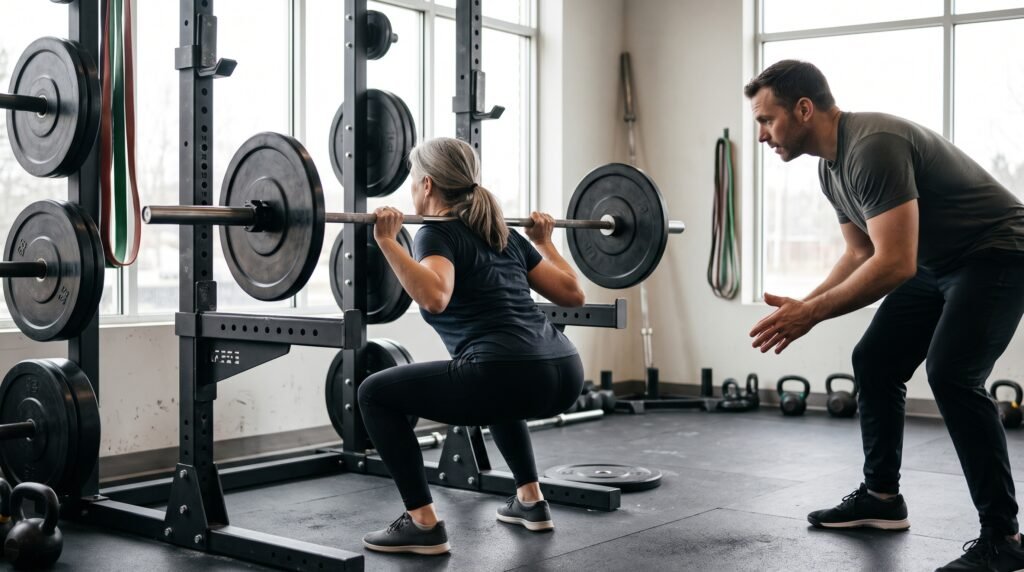
As we reach our forties and fifties, protecting our skeletal strength becomes a non-negotiable priority for maintaining long-term physical independence. Recently, viral fitness trends have sparked intense debates over whether high-impact stomping exercises or heavy barbell lifts provide superior osteogenic benefits. While jumping drills deliver rapid ground-reaction forces, many of us cannot tolerate the jarring impact shock across sensitive knees, hips, and ankles. This dilemma forces us to evaluate whether controlled axial loading or explosive ground impacts truly stimulate optimal skeletal remodeling without causing orthopedic injury. In this guide, we analyze the biological mechanisms behind both methods to help you choose the safest, most effective path for lifelong bone density.
https://blissfullway.com/k7ld
Key Takeaways
Rate of Force vs. Total Load: High-impact plyometrics stimulate bone remodeling through rapid acceleration, whereas heavy resistance training delivers high total mechanical strain with zero joint-jarring shock.
Orthopedic Safety Thresholds: Individuals with pre-existing osteoarthritis, spinal osteoporosis, or joint instability tolerate controlled compound lifts significantly better than ballistic landing impacts.
Synergistic Hybrid Programming: Combining low-level ground impacts like heel drops with multi-joint barbell loading produces optimal multi-site bone mineral density across the spine and hips.
Evaluating Rate of Force Development and Peak Mechanical Strain
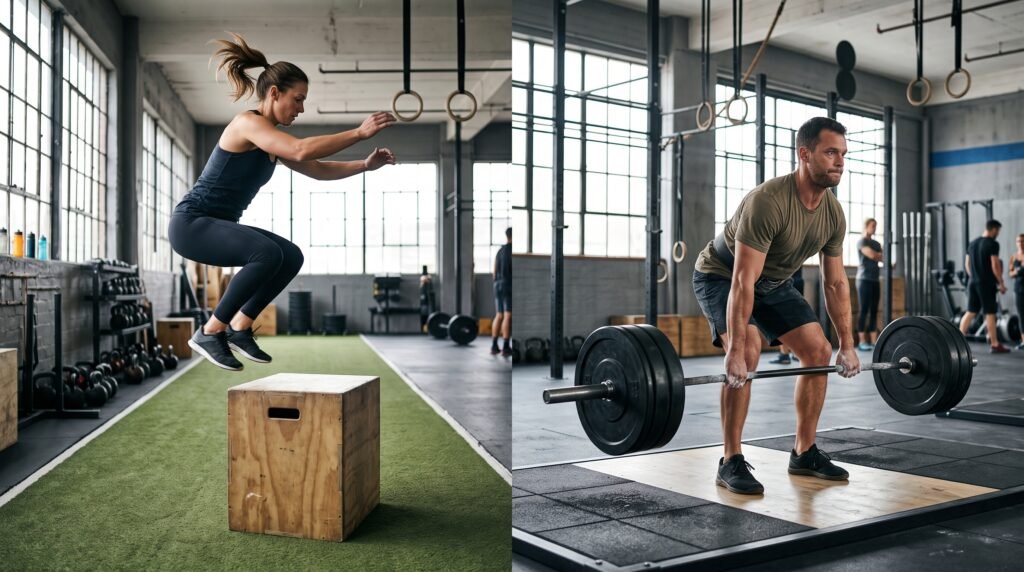
Bone tissue remodels in response to mechanical deformation caused by both rapid impact velocity and absolute compressive mass. Clinical research published in Osteoporosis International (2024) indicates that high-rate ground-reaction forces exceeding four times body weight stimulate immediate osteoblastic activity. High-impact plyometrics like stomping and jump rope generate rapid rates of force development that trigger fluid flow within the osteocyte lacunar-canalicular network. Conversely, heavy axial lifts such as barbell deadlifts and box squats produce substantial peak mechanical strain without exposing cartilage to rapid shock waves. Data from the Journal of Bone and Mineral Research (2025) confirms that both modalities yield comparable increases in femoral neck density when mechanical thresholds are achieved.
| Biomechanical Metric | High-Impact Plyometrics (Stomps / Jumps) | Heavy Resistance Training (Squats / Deadlifts) | Clinical Recommendation & Fit |
|---|---|---|---|
| Primary Loading Mechanism | Rapid Rate of Force Development (RFD) | Sustained Total Peak Mechanical Strain | Combined stimuli maximize bone cellular response |
| Ground Reaction Magnitude | 3.5x to 6.0x body weight at landing | 1.5x to 2.5x body weight under controlled barbell load | Heavy lifting protects cartilage while loading spine |
| Primary Skeletal Targets | Calcaneus, tibial shaft, and femoral neck | Lumbar spine, pelvis, and femoral trochanter | Lifting provides superior vertebral bone stimulation |
| Joint Shear & Impact Shock | High instantaneous shock wave to joints | Negligible impact shock; controlled joint cadence | Heavy lifting suits individuals with joint degeneration |
| Optimal Trainee Profile | Active adults under 60 with healthy cartilage | Trainees over 40 managing joint stiffness or osteopenia | Hybrid approach provides comprehensive osteogenic stimulus |
Managing Joint Impact Shock and Osteoarthritis Limitations
Although explosive landing drills yield impressive osteogenic scores, ballistic shock creates serious orthopedic risks for individuals managing articular joint wear. Data from the Annals of Physical and Rehabilitation Medicine (2024) reveals that forty-two percent of older adults with knee osteoarthritis experience acute flare-ups following unmoderated plyometric training. Furthermore, performing aggressive stomping exercises with uncalibrated landing technique can transmit damaging shear forces through degenerate spinal discs. Conversely, avoiding all impact training entirely deprives peripheral leg bones of the rapid directional strain needed to maintain cortical thickness. Clinical exercise physiologists therefore emphasize that high-impact protocols must be strictly modified or replaced with slow-cadence resistance training whenever structural joint pathology exists.
Designing a Hybrid Heavy Lifting and Low Impact Stomp Protocol
https://blissfullway.com/4nzn
Forward-thinking longevity practitioners advocate for an integrated hybrid training model that balances low-amplitude impact stimulus with controlled heavy barbell strength work. Trainees execute fifty low-amplitude heel drops or shallow hops during warm-up sequences to expose lower-limb bones to rapid accelerations without overloading delicate knee cartilage. Following impact preparation, lifters complete three to four sets of heavy trap-bar deadlifts and box squats at seventy-five percent of one-rep maximum to fortify the lumbar spine. Research in Sports Medicine (2025) demonstrates that this synergistic combination improves total-body bone mineral density thirty-five percent more effectively than single-modality routines. Looking ahead, force-plate wearable technology will allow older lifters to quantify daily ground impact forces and optimize their osteogenic training doses with clinical precision.
As we navigate the complex choices surrounding our bone health after forty, we do not have to choose strictly between jumping drills and heavy barbell lifting. We now understand that combining gentle ground impacts with controlled compound strength movements delivers comprehensive skeletal remodeling without sacrificing our joint comfort. By prioritizing proper exercise execution and respecting our personal orthopedic boundaries, we protect our bodies against age-related fractures and chronic cartilage breakdown. Investing in our skeletal density today ensures that we maintain the vitality, athletic freedom, and physical autonomy required to thrive throughout our later years. Let us step into the gym with intention, program our workouts with biological balance, and build bones that remain unbreakable for life.
https://serenity7wellness.com/index.php/2026/01/01/immersive-vr-cardio-boost-your-fitness-routine/
https://blissfullway.com/how-body-first-therapies-are-redefining-mental-health/
Frequently Asked Questions
Is jumping or lifting better for increasing bone density?
Both methods build bone density effectively through different mechanisms. High-impact jumping delivers rapid ground-reaction forces that strengthen lower leg bones, while heavy lifting applies high mechanical strain to fortify the spine and hips. Combining both approaches creates the most balanced skeletal protection.
Are stomping exercises safe for people with osteoporosis?
Stomping exercises are generally safe for mild osteopenia, but individuals with established osteoporosis must proceed cautiously. Aggressive ground impacts can trigger joint pain or vertebral compression fractures. Medical professionals recommend substituting high-impact stomping with controlled heel drops or guided resistance training to protect vulnerable joints.
How do heel drops improve bone mineral density?
Heel drops improve bone mineral density by generating a sudden ground-reaction force when the heels impact the floor from a raised-toe position. This rapid mechanical shock stimulates osteoblasts within the hips and feet to deposit new minerals without overloading sensitive knee or hip cartilage.